Choosing a passenger elevator often appears straightforward until capacity, traffic, waiting time, shaft dimensions, floor count, accessibility, and operating frequency are considered together.
For builders and property managers in Delhi, selecting passenger lifts based only on the number of people shown in a specification can result in a system that does not match actual building demand.
Start With Building Usage
Two buildings with the same number of floors can require very different elevator arrangements.
A residential property generally has distributed passenger movement. An office may experience concentrated traffic during particular periods. Hospitals can have patients, attendants, staff, and equipment moving simultaneously. Hotels must accommodate guests and luggage.
Before specifying a passenger lift, determine:
- Building type
- Number of floors served
- Approximate occupancy
- Peak traffic periods
- Accessibility needs
- Available shaft dimensions
- Required travel speed
- Expected frequency of operation
These details create a more meaningful basis for lift selection.
Capacity Needs Context
A higher-capacity elevator is not automatically the better choice.
Increasing capacity can affect cabin dimensions, shaft requirements, equipment specifications, and project cost. Conversely, choosing too little capacity may result in crowding and longer waiting periods.
For larger buildings, traffic analysis may indicate that multiple appropriately sized elevators are more suitable than relying on a single high-capacity unit.
Door Configuration Influences Movement
Door width and opening characteristics affect how easily passengers enter and leave the cabin.
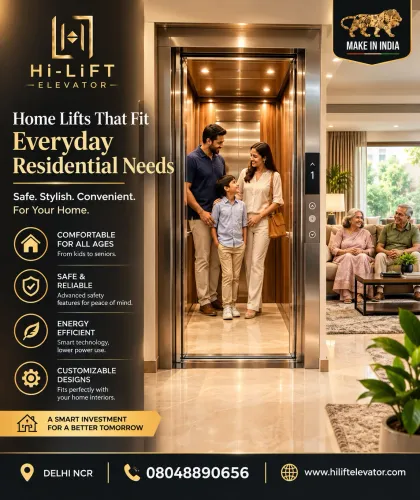
This becomes particularly important in buildings used by older adults, wheelchair users, families, hotel guests with luggage, or people carrying everyday items.
Automatic doors are widely used because they support convenient passenger movement. Their sensors, tracks, alignment, and operating mechanisms require periodic maintenance to preserve dependable operation.
Ride Comfort Matters
Passengers experience an elevator through movement rather than technical specifications.
Smooth starting, controlled acceleration, accurate floor levelling, comfortable stopping, reasonable noise levels, and predictable door operation all influence ride quality.
The drive system, controller, installation accuracy, guide arrangement, component condition, and maintenance quality can contribute to these characteristics.
Cabin Design Should Serve Its Environment
Cabin interiors should reflect the intended property.
A premium apartment development may prioritise refined finishes. A busy commercial property may require surfaces that tolerate frequent use. Hospitals can place greater emphasis on accessibility and easy-to-maintain interiors.
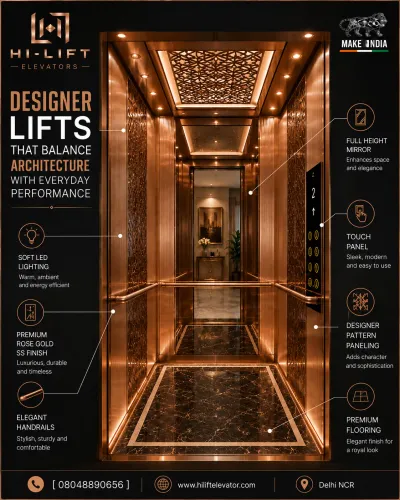
Lighting, flooring, control panels, handrails, mirrors, ventilation, ceiling treatment, and wall finishes should therefore be selected around use rather than appearance alone.
Evaluate Long-Term Operation
Delhi properties can experience substantial lift usage, making maintenance planning an important part of procurement.
Ask prospective providers about service arrangements, preventive maintenance, fault response procedures, spare-parts planning, equipment accessibility, and modernization possibilities.
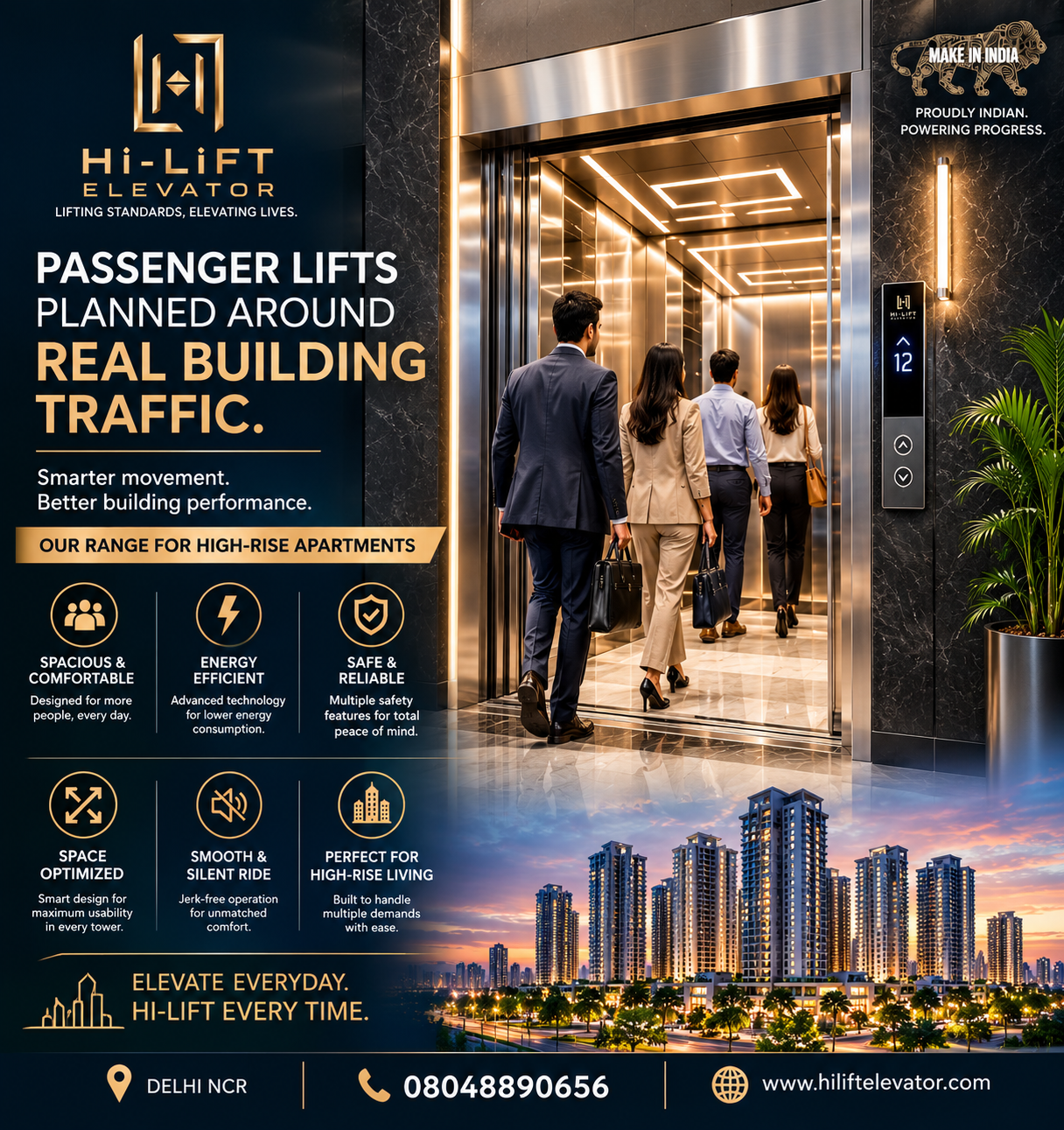
Hi-Lift Elevator provides passenger elevator solutions for residential, commercial, institutional, and other building applications where lift specifications need to reflect actual property requirements.
A properly selected passenger elevator should do more than fit inside the shaft. It should support the building's daily movement comfortably and consistently while providing a practical foundation for inspection, maintenance, and future servicing.
Keywords