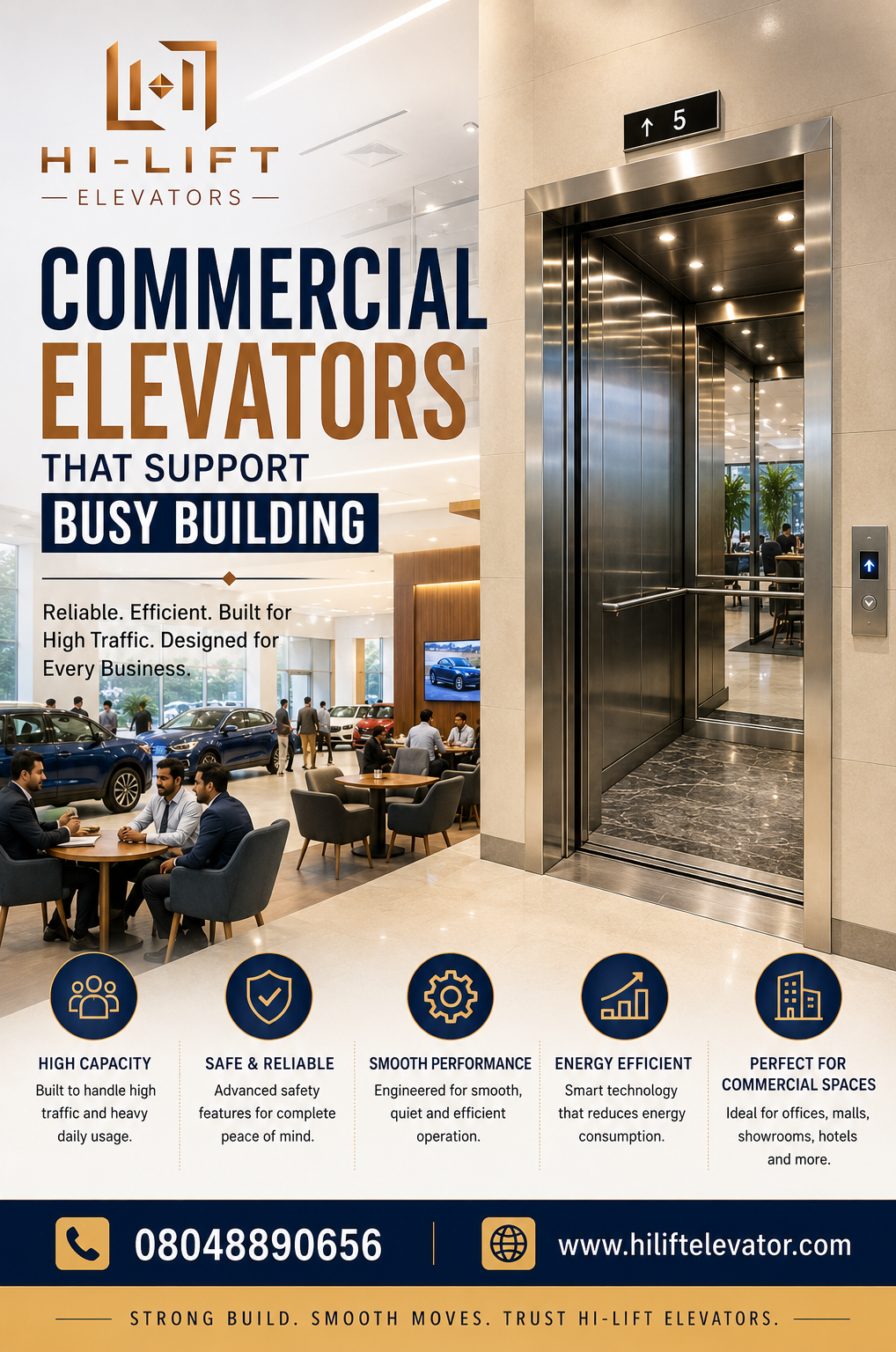
Modern commercial properties expect much more from an elevator than basic movement between floors. Offices, hotels, hospitals, business centres, retail properties, and mixed-use developments can experience long operating hours, changing passenger volumes, accessibility requirements, and demanding expectations around reliability.
For properties across Delhi NCR, today's commercial elevators can combine contemporary drive technology, intelligent controls, modern cabin interfaces, safety provisions, and monitoring capabilities to support more efficient vertical mobility.
Smart Controls Are Changing Elevator Operation
The controller acts as an important part of an elevator's operating system.
Modern microprocessor-based controls can coordinate acceleration, deceleration, floor calls, stopping, and door operation. In multi-lift installations, suitable group-control systems can help coordinate elevators according to passenger calls and building traffic.
For busy commercial properties, control technology should therefore be selected around expected usage rather than treated simply as another specification.
Modern Drive Technology Supports Ride Quality
Passengers may never see the elevator drive system, but they experience its performance on every journey.
Appropriate contemporary drive technology can support controlled acceleration and deceleration, comfortable movement, and accurate floor levelling when correctly specified and installed.
Gearless systems may also be considered for suitable applications, depending on factors such as building height, capacity, speed, shaft conditions, and overall elevator configuration.
Digital Cabin Technology Improves Interaction
Technology is also increasingly visible inside the elevator.
Depending on the selected configuration, contemporary commercial elevator cabins can incorporate features such as:
- Digital floor indicators
- Modern operating panels
- Emergency communication systems
- Automatic rescue arrangements
- Efficient LED lighting
- Door sensors
- Overload indication
- Accessible controls
- Contemporary display systems
- Custom cabin interfaces
These features should be integrated into a cabin design that suits the character of the commercial property.
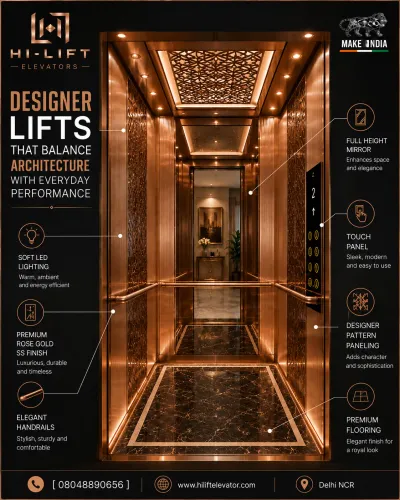
A technology-focused elevator does not have to look like a basic stainless-steel box. Premium wall finishes, distinctive lighting, modern ceilings, elegant control panels, glass elements where appropriate, and customized detailing can create an interior that visually reflects the technology behind the system.
Monitoring Can Support Maintenance Planning
Modern elevator technology is increasingly focused on understanding equipment condition rather than responding only after a problem becomes obvious.
Depending on the system installed, monitoring capabilities can provide useful operating or fault information to support servicing and maintenance decisions.
However, monitoring technology does not eliminate the need for physical inspection and preventive maintenance.
Doors, controls, electrical connections, drive components, safety provisions, and other relevant equipment still require appropriate servicing.
Technology Must Match Commercial Traffic
Installing advanced technology without understanding the building can result in unnecessary features or inadequate performance.
Before selecting a commercial elevator, evaluate:
- Building occupancy
- Floors served
- Peak traffic
- Number of lifts
- Required capacity
- Operating hours
- Accessibility
- Desired speed
- Available shaft dimensions
- Maintenance requirements
A hotel does not necessarily require the same elevator configuration as a corporate office, hospital, showroom, or commercial complex.
Hi-Lift Elevator provides elevator manufacturing, installation, modernisation, repair, and maintenance solutions for properties requiring contemporary lift systems.
For commercial developments across Delhi NCR, the strongest technology choices are those that solve actual building requirements.
A modern cabin may create an immediate visual impression, but genuine elevator technology goes deeper. Intelligent controls, suitable drive systems, safety features, digital interfaces, appropriate monitoring, comfortable operation, and maintainable engineering should work together to create a commercial elevator suited to today's buildings and their long-term operation.
Keywords