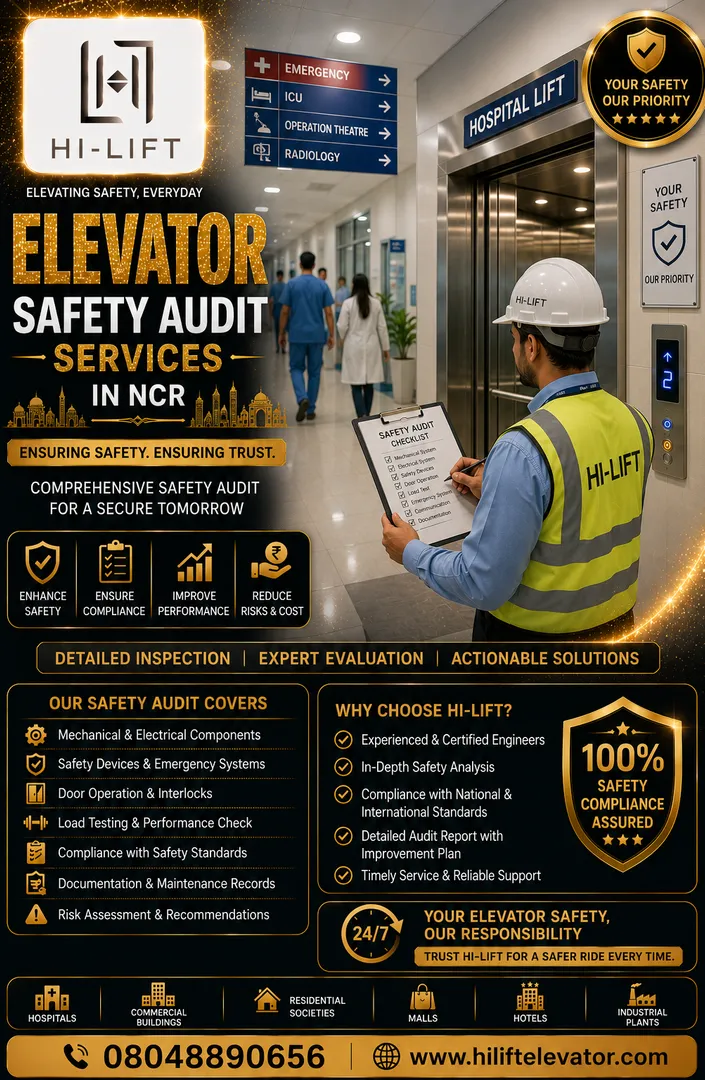
Regular maintenance keeps an elevator operating, while a safety audit provides a broader evaluation of its condition, risk areas and compliance-related documentation. This independent technical review is particularly valuable for older lifts, high-traffic properties and buildings experiencing recurring faults.
Hi-Lift Elevator supports elevator safety audit services across NCR, including New Delhi, Noida, Gurgaon, Faridabad and nearby locations. An audit can help property owners prioritise corrective work and make informed decisions about repair, maintenance or modernisation.
When Should an Elevator Be Audited?
A safety audit may be considered when:
- The elevator has been operating for many years
- Building ownership or management has changed
- Maintenance records are incomplete
- Breakdowns are becoming frequent
- Passengers report jerking or levelling problems
- Water has entered the shaft or pit
- Major repairs have recently been completed
- The AMC provider is being changed
- Modernisation is being considered
- Emergency systems have not been tested recently
An audit may also be useful before purchasing or occupying a property with existing elevators.
Maintenance Visit vs Safety Audit
A routine maintenance visit focuses on scheduled servicing, adjustment and immediate operational issues. A safety audit takes a wider view of the installation.
It may examine equipment condition, recurring defects, emergency provisions, records, housekeeping and the adequacy of existing maintenance practices. The objective is not simply to confirm that the lift moves but to identify risks that may affect safe and dependable operation.
Areas Covered During an Audit
The exact scope depends on the elevator type and age. A typical inspection may review:
- Landing and cabin doors
- Door interlocks and sensors
- Drive and braking system
- Controller and electrical panels
- Suspension and guiding components
- Floor levelling accuracy
- Automatic rescue device
- Alarm and communication system
- Overload protection
- Cabin lighting and ventilation
- Pit condition
- Machinery or equipment areas
- Warning signs and access control
- Maintenance and breakdown records
Visible damage, unusual noise, fluid leakage, water exposure and unauthorised storage should also be documented.
Documentation Matters
Building management should make available the documents associated with installation, maintenance, repair and previous inspection. Missing records do not necessarily mean the elevator is unsafe, but they can make its history difficult to evaluate.
Useful documents include:
- Equipment specifications
- Approved drawings
- Maintenance visit reports
- Breakdown records
- Repair and replacement invoices
- Previous inspection reports
- Warranty information
- Emergency-rescue instructions
Organised records make it easier to identify repeated problems and evaluate whether earlier recommendations were completed.
What Should the Audit Report Contain?
A useful report should describe findings in clear language and prioritise them according to importance. It should distinguish urgent safety concerns from routine maintenance recommendations and longer-term improvements.
The report may categorise observations as:
- Immediate attention required
- Corrective work required soon
- Preventive maintenance recommendation
- Performance improvement
- Modernisation consideration
- Documentation or housekeeping issue
Photographs and component references can make the findings easier for property managers and committees to understand.
Avoid Treating an Audit as a Repair Estimate
The primary purpose of the audit is to establish the elevator’s condition and identify necessary actions. Building owners should first understand the findings and then request itemised proposals for corrective work.
For significant repairs, ask which recommendations affect safety, reliability or comfort. This supports sensible budgeting and prevents cosmetic improvements from taking priority over essential work.
Recheck After Corrective Work
Once important observations have been addressed, the completed work should be verified. Service reports, replacement details and test results should be added to the building’s elevator records.
A safety audit offers the greatest value when its recommendations lead to documented action. It gives owners, facility managers and resident committees a structured basis for maintaining safer and more reliable vertical transportation.
Schedule an elevator safety audit with Hi-Lift Elevator to understand the current condition of your lift system in Delhi NCR.
Keywords