An elevator annual maintenance contract should do more than provide assistance after a breakdown. Its primary purpose is to identify wear, adjustment issues and safety concerns before they interrupt service or put passengers at risk.
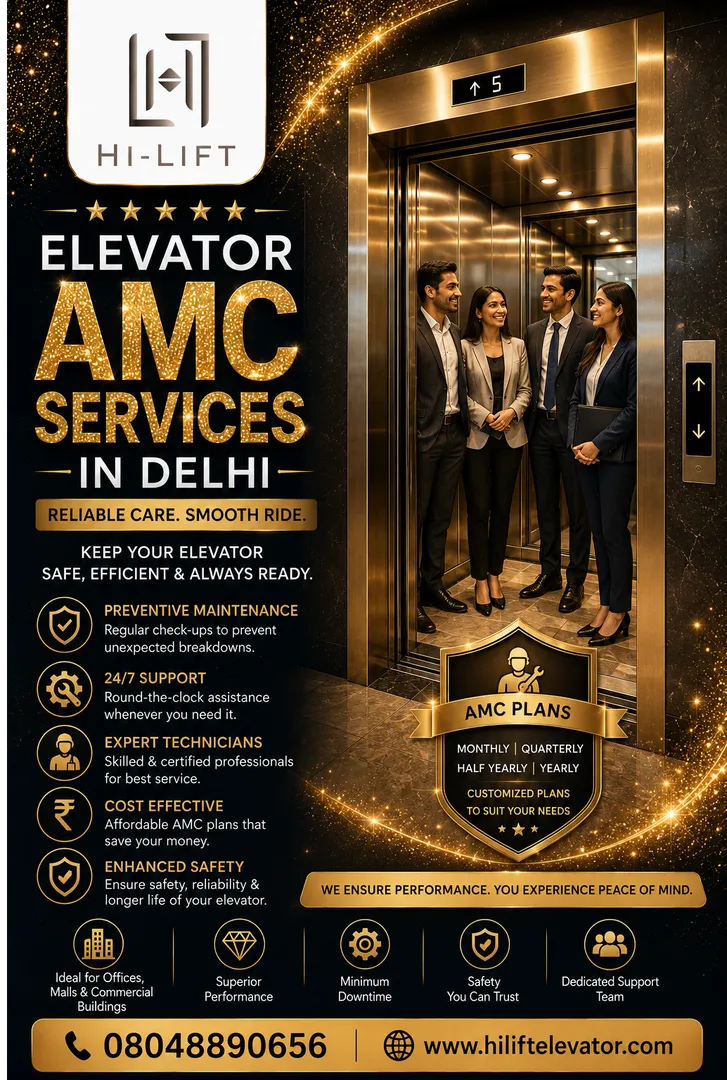
Hi-Lift Elevator offers elevator AMC services in Delhi for buildings that require planned inspections and dependable technical support. Before signing or renewing a contract, property owners should understand its coverage, exclusions, visit schedule and response commitments.
Why Preventive Maintenance Matters
Elevators contain mechanical, electrical and electronic systems that operate together. Door components, controllers, sensors, brakes and levelling systems experience gradual wear even when the lift appears to be running normally.
Preventive visits allow technicians to check developing issues such as:
- Irregular door movement
- Unusual vibration or noise
- Inaccurate floor levelling
- Worn moving components
- Loose electrical connections
- Faulty buttons or indicators
- Weak emergency batteries
- Lubrication deficiencies
Early attention generally reduces the likelihood of sudden stoppages and larger repairs.
Comprehensive vs Non-Comprehensive AMC
A non-comprehensive contract usually covers scheduled service visits and labour for routine attention, while many replacement parts remain chargeable.
A comprehensive AMC may include a broader range of component replacements, subject to stated exclusions and contract conditions. However, the term “comprehensive” should never be accepted without reviewing the actual document.
Ask for a written list of:
- Included components
- Excluded components
- Consumable items
- Replacement conditions
- Labour charges
- Emergency-visit terms
- Taxes and additional costs
The appropriate contract depends on the elevator’s age, condition, usage and component availability.
How Often Should an Elevator Be Serviced?
Service frequency should be based on usage rather than a one-size-fits-all schedule. A busy hospital or office elevator may require closer attention than a lightly used residential lift.
Factors affecting service frequency include:
- Number of daily trips
- Building occupancy
- Elevator age
- Environmental exposure
- Door-opening frequency
- Previous breakdown history
- Manufacturer recommendations
Delhi’s dust, summer heat and monsoon moisture can also affect door tracks, ventilation, electrical parts and equipment areas. Maintenance planning should account for these regional conditions.
What Should Technicians Inspect?
The inspection scope should cover more than cleaning and lubrication. Depending on the elevator type, technicians should examine doors, interlocks, controls, brakes, guide systems, safety devices, emergency communication and rescue functions.
The pit and machinery areas should be checked for water, debris, overheating or unauthorised storage. Automatic rescue and alarm systems should be tested periodically rather than assumed to be functional.
Every visit should generate a service record describing observations, work completed and parts requiring attention.
Response Time Must Be Defined
“Quick response” is open to interpretation. The contract should state how breakdown calls are registered, supported and escalated.
Ask whether separate response arrangements apply to:
- Routine operational complaints
- Complete lift shutdowns
- Passenger entrapment
- Night-time calls
- Sundays and public holidays
- Buildings outside central New Delhi
Emergency contact numbers should be displayed inside the cabin and with the building’s authorised personnel.
Conduct an Initial Condition Assessment
Before accepting an older elevator under AMC, the provider may conduct a technical inspection. This assessment helps identify pre-existing defects, obsolete parts and repairs needed before routine coverage begins.
Property owners should request a written report rather than accepting verbal observations. If major work is recommended, ask for the safety relevance, urgency and itemised cost.
Maintain Building-Level Records
Building management should retain service reports, breakdown logs, repair invoices and safety inspection documents. These records reveal recurring faults and help assess whether the AMC provider is performing preventive work effectively.
A strong maintenance contract combines defined coverage, regular inspections, proper documentation and realistic emergency support. The focus should remain on safety and consistent performance rather than the lowest annual fee.
Arrange an elevator condition check with Hi-Lift Elevator before selecting or renewing your AMC.
Keywords